

Retaining Walls in Lake Macquarie, NSW

Engineered and feature retaining walls in sandstone, block and timber for sloping blocks and waterfront sites, usually built as part of a wider landscape project rather than as a standalone wall.

Request a Free Quote

By submitting this form, you agree to our Privacy Policy.

Engineered Retaining Walls for Sloping Blocks and Lakefront Homes in Lake Macquarie

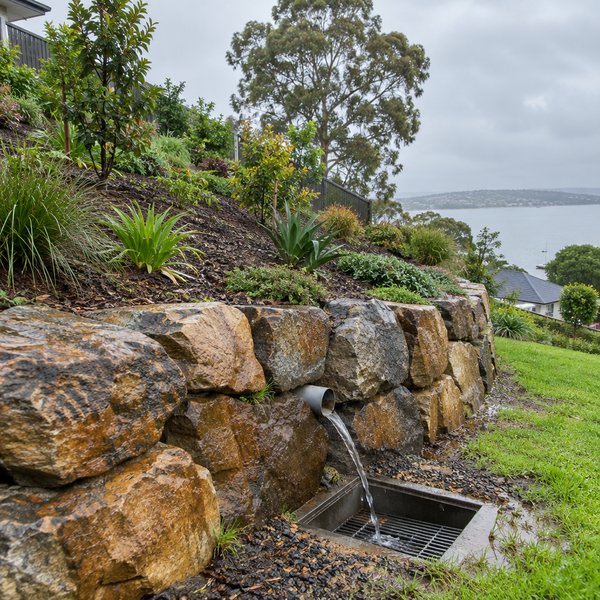
A good retaining wall turns a steep, unusable block into level ground you can actually live on. We build walls in split-face sandstone, natural boulders, core-filled concrete blockwork with render or stone cladding, segmental concrete block, and concrete sleepers on galvanised steel posts. Every wall sits on a properly excavated and compacted footing. Behind it goes slotted ag pipe in a filter sock, free-draining aggregate backfill and geotextile fabric, so water drains away instead of building up pressure. On taller or loaded walls we work to engineered designs, which can include geogrid reinforcement tied back into the slope.

Conditions around Lake Macquarie are tough on walls. Heavy coastal downpours soak clay-heavy hillside soils, and that saturated soil pushes hard against anything holding it back. Near the water, sandy fill and a high water table call for a different footing and drainage approach. Parts of the area also sit within declared mine subsidence districts, where extra approvals and design requirements can apply. Walls that bulge, lean or crack here are almost always the result of poor drainage or an undersized footing, and those are the two details we take most seriously.

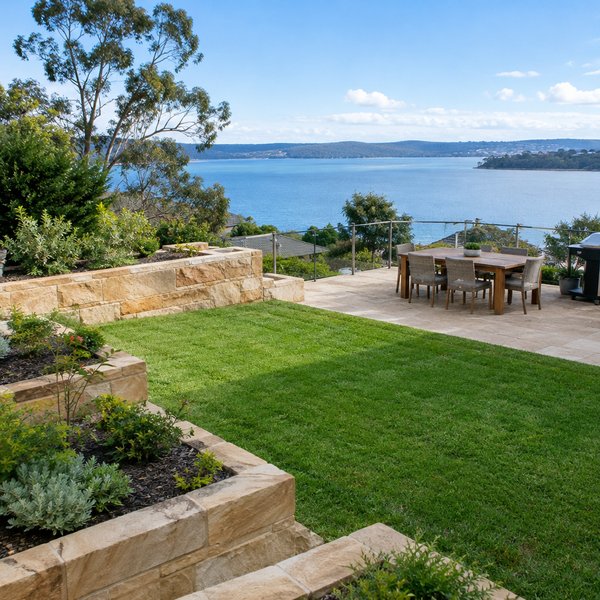
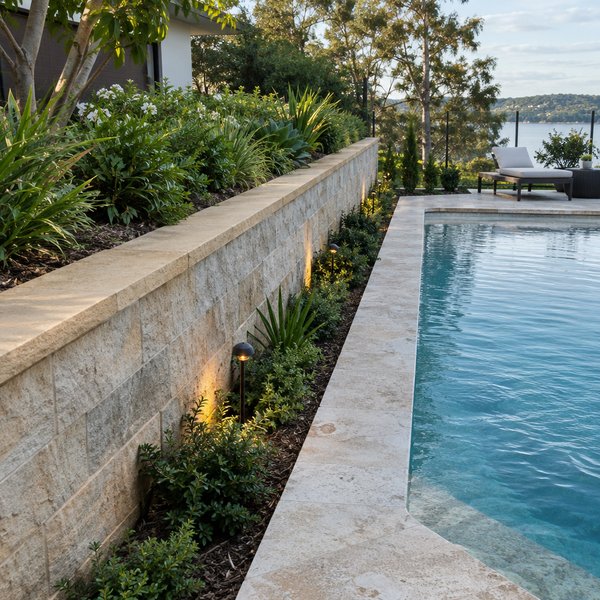
Most of our walls are part of a bigger plan. A cut-and-fill wall might create the flat pad for a new pool, a terraced lawn for the kids, or a level area for an outdoor kitchen with views over the lake. We design and build those walls as part of our wider landscape construction work, so levels, steps, drainage and finishes all line up. If a pool is part of the picture, we coordinate the walls with our pool landscaping team from the first set-out.

  • Split-face and sawn sandstone block retaining walls
  • Natural boulder walls for lakefront and acreage slopes
  • Core-filled concrete blockwork with render or stone cladding
  • Concrete sleeper walls on galvanised steel posts
  • Engineered walls with geogrid reinforcement for taller cuts
  • Ag pipe, aggregate backfill and geotextile drainage behind every wall
  • Terraced garden walls with integrated steps and garden lighting conduit
  • Cut-and-fill levelling for pools, lawns and entertaining areas

How We Build Retaining Walls on Lake Macquarie Slopes

From soil checks and footings to drainage and final landscaping

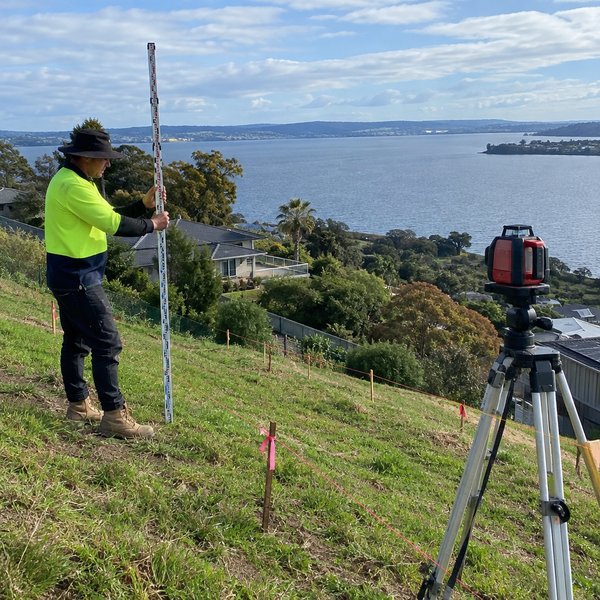
Step 1: Site Levels, Soil Check and Wall Design

We survey the slope, take levels and look closely at the soil, existing drainage and any nearby structures or boundaries. From there we choose the wall type and material that suit the load and the look of your home. Where a wall needs engineering, council approval or mine subsidence sign-off, we organise the design work before anything is dug.

Retaining Walls - Site Levels, Soil Check and Wall Design in Lake Macquarie

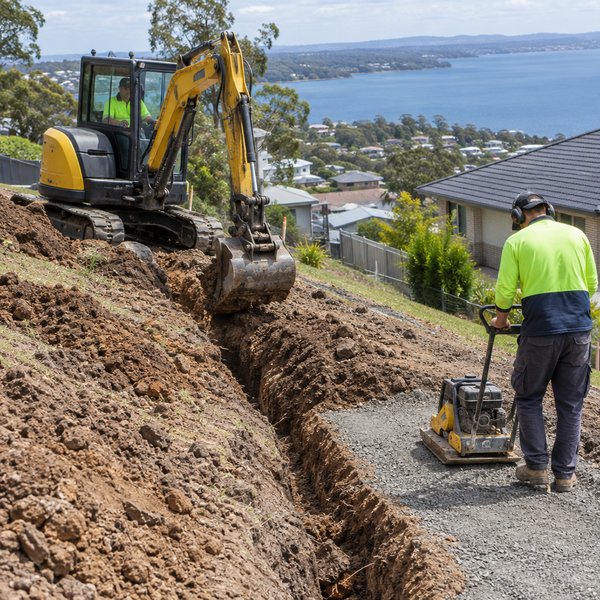
Step 2: Excavation and Footing Preparation

Our crew brings in an excavator to cut the slope back and dig the footing trench to the required depth and width. The base gets compacted road base or a reinforced concrete footing, depending on the wall type and engineering. We check every course line with a laser level so the wall starts dead straight and at the right fall.

Retaining Walls - Excavation and Footing Preparation in Lake Macquarie

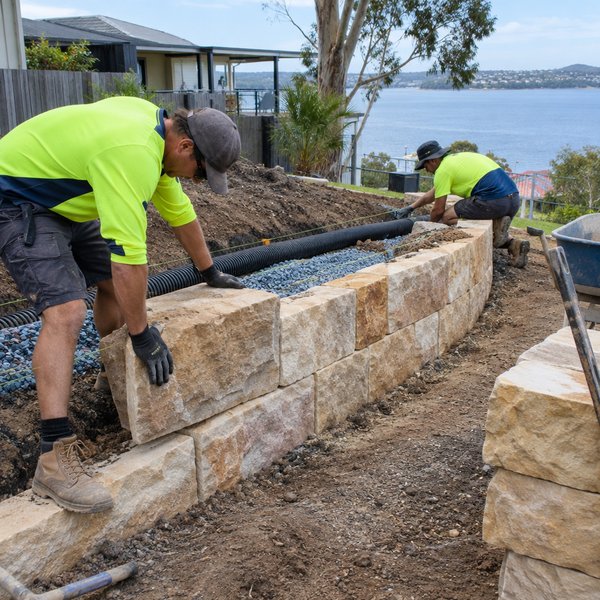
Step 3: Building the Wall and Installing Drainage

We lay the sandstone, blocks, boulders or sleepers course by course, setting the correct lean-back into the slope. Slotted ag pipe in a filter sock runs along the base and connects to a legal stormwater outlet. Free-draining aggregate goes directly behind the wall, with geotextile fabric separating it from the soil, plus geogrid layers where the design calls for them.

Retaining Walls - Building the Wall and Installing Drainage in Lake Macquarie

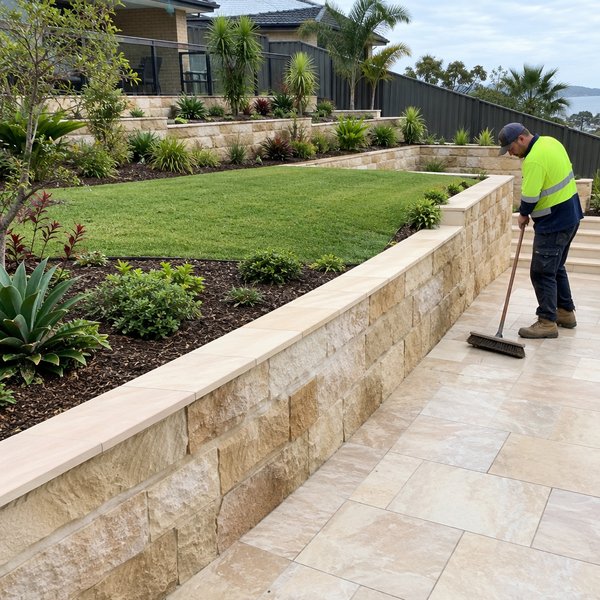
Step 4: Backfill, Compaction and Landscape Finishing

Backfill goes in layer by layer and gets compacted as we go, so the ground above doesn't settle later. We then cap the wall, shape the levels above and below, and tie in steps, paving, turf or planting from the wider design. The site is cleaned up and the drainage is tested before we hand over.

Retaining Walls - Backfill, Compaction and Landscape Finishing in Lake Macquarie

What a Well-Built Retaining Wall Does for Your Property

Level space, stable ground and a finish that suits your home

More Usable, Level Outdoor Space

A well-placed wall turns a steep slope into flat ground for a pool, lawn, deck or entertaining area. Instead of a backyard you only look at, you get space you use every weekend. On lakefront blocks, terracing can also open up better views from each level.

More Usable, Level Outdoor Space - Retaining Walls in Lake Macquarie

Slopes That Stay Put Through Heavy Rain

Proper footings and drainage stop water pressure from building up behind the wall after a big coastal storm. That means less risk of soil slumping into your yard, washing onto paths or undermining structures above. Your garden beds, fences and paving stay where they belong.

Slopes That Stay Put Through Heavy Rain - Retaining Walls in Lake Macquarie

A Wall That Adds to the Look of Your Home

Natural sandstone, rendered blockwork or stone cladding can match your house, pool surround and paving. The wall becomes a feature rather than a utility structure. Done well, it lifts the overall finish of the property and how it presents to buyers down the track.

A Wall That Adds to the Look of Your Home - Retaining Walls in Lake Macquarie

Why Lake Macquarie Homeowners Trust Us With Their Retaining Walls

Walls Designed Around the Whole Landscape

We plan walls together with your pool, paving, decks and entertaining areas, not as a separate job. That means levels, steps and drainage work as one system. One team manages the full scope from excavation to final planting.

Drainage Done Properly, Every Time

Water is the main reason walls fail in Lake Macquarie. We install ag pipe, aggregate backfill and geotextile behind every wall and connect outlets to a legal discharge point. It's the part you never see, and the part we never cut corners on.

Experience With Lake Macquarie Soils and Sites

We know the difference between building on reactive hillside clay and sandy lakefront fill. We also understand how mine subsidence districts and council rules affect wall design. That local knowledge shapes footing depth, wall type and approvals from day one.

Premium Stone and Masonry Finishes

From split-face sandstone to rendered blockwork with natural stone capping, we build walls that match the quality of your home. Every course is laid level and true. The finish ties in with our paving, pool surrounds and outdoor living work.

Retaining Wall Questions From Lake Macquarie Homeowners

Common questions answered

Do I need council approval for a retaining wall in Lake Macquarie?

It depends on the wall height, how close it is to a boundary or structure, and how much fill sits behind it. Many walls can be built as exempt or complying development, but taller or loaded walls usually need engineering and approval. Some properties in Lake Macquarie also fall within mine subsidence districts, which adds its own requirements, and we check all of this during design.

What affects the cost of a retaining wall?

The main factors are the wall length and height, the material you choose, site access for machinery, and how much soil needs to be dug out or brought in. Engineering, drainage connections and approvals also add to the scope. We give you a detailed quote after a site visit so you can compare materials side by side.

Which retaining wall material works best near the lake?

On lakefront and low-lying sites we often use natural boulders, sandstone or core-filled blockwork because they handle moisture and sandy fill well. Concrete sleepers with galvanised posts suit many hillside blocks where access is tight. Timber sleepers can work for low garden walls, but they don't last as long as masonry or stone in our damp conditions.

How long does it take to build a retaining wall?

Timing depends on the size of the wall, the material, site access, approval requirements and the weather. Wet weather can pause excavation because saturated clay is hard to compact properly. We map out the build sequence with you before we start, especially when walls are one stage of a larger project.

What maintenance does a retaining wall need?

Keep the drainage outlets and weep holes clear, and make sure downpipes and surface water aren't dumping onto the wall. Check after big storms for any bulging, leaning or new cracks, which usually point to a drainage problem. Avoid planting large trees right behind the wall, as roots can push it out over time.

Retaining Walls Service Areas

We provide Retaining Walls throughout Lake Macquarie, NSW and surrounding suburbs.

Don't see your area? Contact us to check if we service your location!

View All Areas

Plan Your Retaining Wall and Landscape Project With Us

Tell our team what you need and request a free quote.

(02) 4011 8141